About Gas Detectors
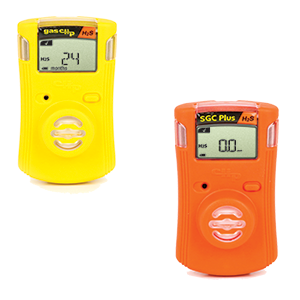
Tough!
Whether its the hottest or the coldest environment, our Single Gas Clip is designed and tested to provide worker safety in the harshest working conditions.
Easy to own and operate.
At Gas Clip Technologies, we use the latest technology to enhance customer safety. We quality test 100% of our detectors, not just a random sample. Thats why we can offer a low cost of ownership. There are no hidden service charges, just reliable detectors that will help your facility workers and contractors do their jobs safely, productively and cost effectively.
Advanced Gas Leak Detection for Enhanced SafetyCombining rapid response sensors and a digital LCD display, this wall-mounted gas detector ensures timely identification of combustible, toxic, or harmful gases. Its robust design and IP65 protection make it suitable for harsh environments, promoting the safety of personnel and facilities through real-time monitoring and reliable alarm notification.
Flexible Integration and Data ManagementEquipped with multiple signal outputs4-20mA, RS485, and relaythe detector seamlessly integrates with various control and automation systems. Optional data logging capabilities enable effective record-keeping and regulatory compliance, supporting safety audits and continuous operational improvement.
Simple Installation and MaintenanceMounting this detector on a wall is straightforward, with clearly defined dimensions and port sizes. Choose between manual or automatic calibration modes to extend sensor service life and maintain detection accuracy. Built from durable ABS plastic, it is lightweight and easy to maintain, making routine checks convenient for operators.
FAQs of Gas Detectors:
Q: How is this gas detector installed and what is its recommended location?
A: The detector is designed for wall-mounted installation using the provided mounting pedestal. It should be placed at locations where gas leaks are most likely, such as near valves, pipelines, or machinery that handle combustible or toxic gases, within the operating temperature range of -10C to +50C.
Q: What types of gases can the detector identify and what is its measurement range?
A: This device can detect a variety of combustible, toxic, or harmful gases in air, with a detection range of 0 to 1000 ppm. The sensor selection (electrochemical, semiconductor, or catalytic) allows accurate monitoring tailored to specific gas types.
Q: When should calibration be performed and what are the calibration options?
A: Calibration should be conducted before initial operation and periodically as recommended in the manual. You can choose between manual or automatic calibration modes to maintain detection accuracy and prolong sensor life, which lasts between 2 to 5 years depending on the sensor type.
Q: Where does the alarm output appear and how does it alert users?
A: Audible and visual alarms are emitted directly from the detectorthe alarm siren and signal lights activate when gas concentrations exceed preset thresholds, ensuring immediate awareness and prompt response for personnel in the vicinity.
Q: What are the benefits of the optional data logging feature?
A: Optional data logging allows storage and retrieval of historical gas concentration readings, aiding in safety audits, incident investigations, and regulatory compliance. It enhances traceability and helps organizations monitor trends for better risk management.
Q: How does the detector integrate into existing safety or automation systems?
A: With output signals including 4-20mA, RS485, and relay, the detector connects easily to control panels, alarm apparatus, or building automation systems, ensuring flexible integration and prompt communication of hazardous conditions.
Q: What is the service life of the sensor and what factors influence it?
A: The sensors service life ranges from 2 to 5 years depending on the sensor type and environmental conditions. Regular calibration and maintenance help maximize lifespan, while operation within specified temperature and humidity limits ensures optimal performance.

 Send Inquiry



 Send Inquiry

 Send Inquiry