About CO And Temperature Sensor Suppliers
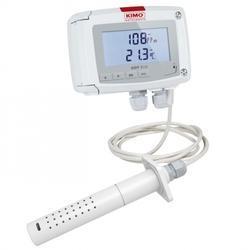
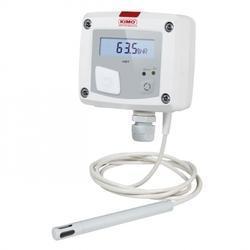
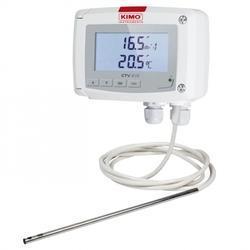
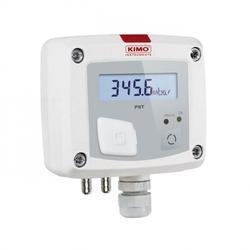
CO And Temperature Sensor:
Our domain expertise has enabled us to come up with quality CO And Temperature Sensor. The products we offer are designed and engineered under the notable guidance of our diligent professionals. Furthermore, our products are timely delivered at clients disposal, with the assistance of wide distribution network.
CO sensors allow you to measure carbon monoxide, which can be a silent killer.
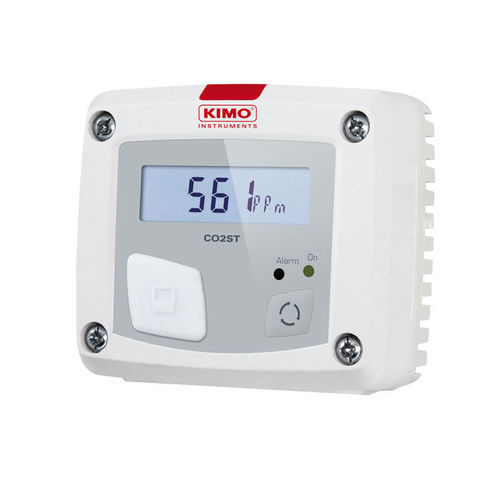
Kimo's CO 110 measures CO from 0 to 500 ppm.
Salient Features :
- Measuring range from 0 to 500 ppm
- 0-10 V active output or 4-20 mA
- With or without 10-digits LCD display
- Housing with simplified mounting system
- Software or DIP switch configuration
- Quick and easy mounting with the 1/4 turn system with wall-mount plate
Technical Data :
| CO |
| Sensor | Min | Max |
| CO | 0.00 ppm | 500.00 ppm |
Technical details :
| Parameters | CO |
| Displays | No 1-line display |
| IP Protection | IP 20 |
| Standards | 2011/65/EU RoHS II
2012/19/EU WEEE
2014/30/EU EMC
2014/35/EU Low Voltage |
| Power supply | 24 Vac/Vdc (Active) or 16/30 Vdc (Passive) |
| Outputs | 0-10 V (Active) or 4-20 mA (Passive) |
| Ethernet communication | No |
| Modbus network | No |
| Instrument Dimensions |
| Length | Width | Height | Weight |
| 90.00 mm | 41.00 mm | 80.00 mm | 138.00 g |
| Operating temperature |
| Min | Max |
| 0.00 C | 50.00 C |
| Storage temperature |
| Min | Max |
| -10.00 C | 70.00 C |
Supplied with
- ABS plate (expect ambiant model)
- Fiche technique
This sensor allows accurate detection of carbon monoxide and surrounding temperatures, offering effective monitoring in critical environments such as factories, commercial buildings, and industrial plants. Its fast response time ensures rapid alerts, helping safeguard personnel and equipment.
Flexible Integration and UseWith analog output, compact dimensions, and low power requirements, the sensor is easy to incorporate into existing systems including air quality networks and HVAC controls. Its broad humidity and operating temperature range add versatility for diverse Indian climates.
FAQs of CO And Temperature Sensor Suppliers:
Q: How is the CO and temperature sensor installed in industrial or HVAC systems?
A: Installation is straightforward; the compact sensor can be easily integrated into control panels or ductwork using standard analog connections. Its small size and lightweight build make retrofitting existing systems simple.
Q: What applications are best suited for this CO and temperature sensor?
A: This sensor is ideal for industrial safety, air quality monitoring, and HVAC system controls. It is used in factories, commercial buildings, laboratories, and any environment where accurate CO and temperature measurement is crucial.
Q: When should routine maintenance or replacement of the sensor be performed?
A: Routine maintenance should be conducted periodically to ensure calibration accuracy. Sensor replacement is typically advised every 2 to 3 years, depending on usage and exposure to contaminants.
Q: Where can I purchase this sensor and are dealers available across India?
A: You can obtain this sensor through authorized dealers, distributors, exporters, manufacturers, suppliers, and wholesalers throughout India. Many service providers also offer installation support and technical assistance.
Q: What is the process for integrating this sensor with existing monitoring equipment?
A: Integration involves connecting the sensors analog output to monitoring or data acquisition systems using the specified voltage range (3.75.5V DC) and following manufacturer guidelines for calibration and configuration.
Q: How does the sensor benefit industrial safety and air quality monitoring?
A: The sensor provides timely and accurate detection of hazardous CO levels and ambient temperature, ensuring rapid response to unsafe conditions. This significantly enhances workplace safety and regulatory compliance.
Q: What are the unique benefits of using an electrochemical CO sensor with a signal-to-noise ratio above 10?
A: A high signal-to-noise ratio enhances measurement reliability, reducing false alarms and improving the accuracy of CO detection. The electrochemical sensing theory is particularly reliable for low-level CO detection in demanding industrial environments.

 Send Inquiry



 Send Inquiry

 Send Inquiry