About Testing & Measuring Equipment
Testing & Measuring Equipment
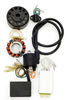
Ignition system: CDI system
Kind of rotor: steel outer rotor
Diameter of rotor: 71.0mm
Control of ignition timing: none
Example of engine: motorcycle for race
Weight: rotor: total: 1,043g
Precise and Reliable Test ResultsEngineered for accuracy, this equipment measures forces in Newtons, kilograms, and pounds with a high resolution of 0.01 N. Benefit from a quick response time ( 1 sec) and factory calibration, ensuring you receive consistent and reliable test data every time. The LCD digital display provides clear, real-time readings.
User-Friendly and Versatile OperationDesigned for flexibility, the system supports manual and digital modes, multiple specimen testing (13 at once), and a wide range of test speeds (50300 mm/min). Its semi-automatic, tabletop construction makes it suitable for various industrial and laboratory environments, with overload protection and safety interlocks enhancing operational safety.
Streamlined Data Management and AnalysisWith USB export capability, RS232 interface, and Windows-based analysis software, managing and analyzing test results is seamless. Data storage, digital print, auto return, and peak hold functions simplify report generation and long-term record-keeping, facilitating regulatory compliance and efficient workflow.
FAQs of Testing & Measuring Equipment:
Q: How is the equipment calibrated, and is a calibration certificate provided?
A: The equipment is factory calibrated to ensure accuracy within 1% F.S., and each unit comes with an official calibration certificate for compliance and validation purposes.
Q: What materials and applications is this tester suitable for?
A: This machine is designed for tensile, compression, and peel tests on a wide variety of materials in both laboratory and industrial settings, accommodating specimens up to 300 mm.
Q: When should the USB export and digital print features be used?
A: Use the USB export and digital print options to conveniently save and share test data for quality audits, research records, or regulatory documentation.
Q: Where can this equipment be installed and who typically uses it?
A: The tabletop design makes it ideal for installation in laboratories or industrial quality control departments. Users include researchers, quality assurance teams, manufacturers, and testing service providers.
Q: What is the process for conducting a standard test?
A: Mount the specimen, select the control mode (manual/digital), set test speed and range, then start the test. Data is displayed in real-time on the LCD and can be exported or printed for analysis.
Q: How does the safety interlock system benefit users?
A: The safety interlock and overload protection minimize risks of accidental operation or damage to the machine, ensuring secure and reliable use for operators.
Q: What software support is available for data analysis?
A: Comprehensive Windows-based analysis software is included, allowing precise evaluation, visualization, and reporting of test results, enhancing workflow efficiency and data management.

 Send Inquiry


 Send Inquiry

 Send Inquiry